
Skip to content
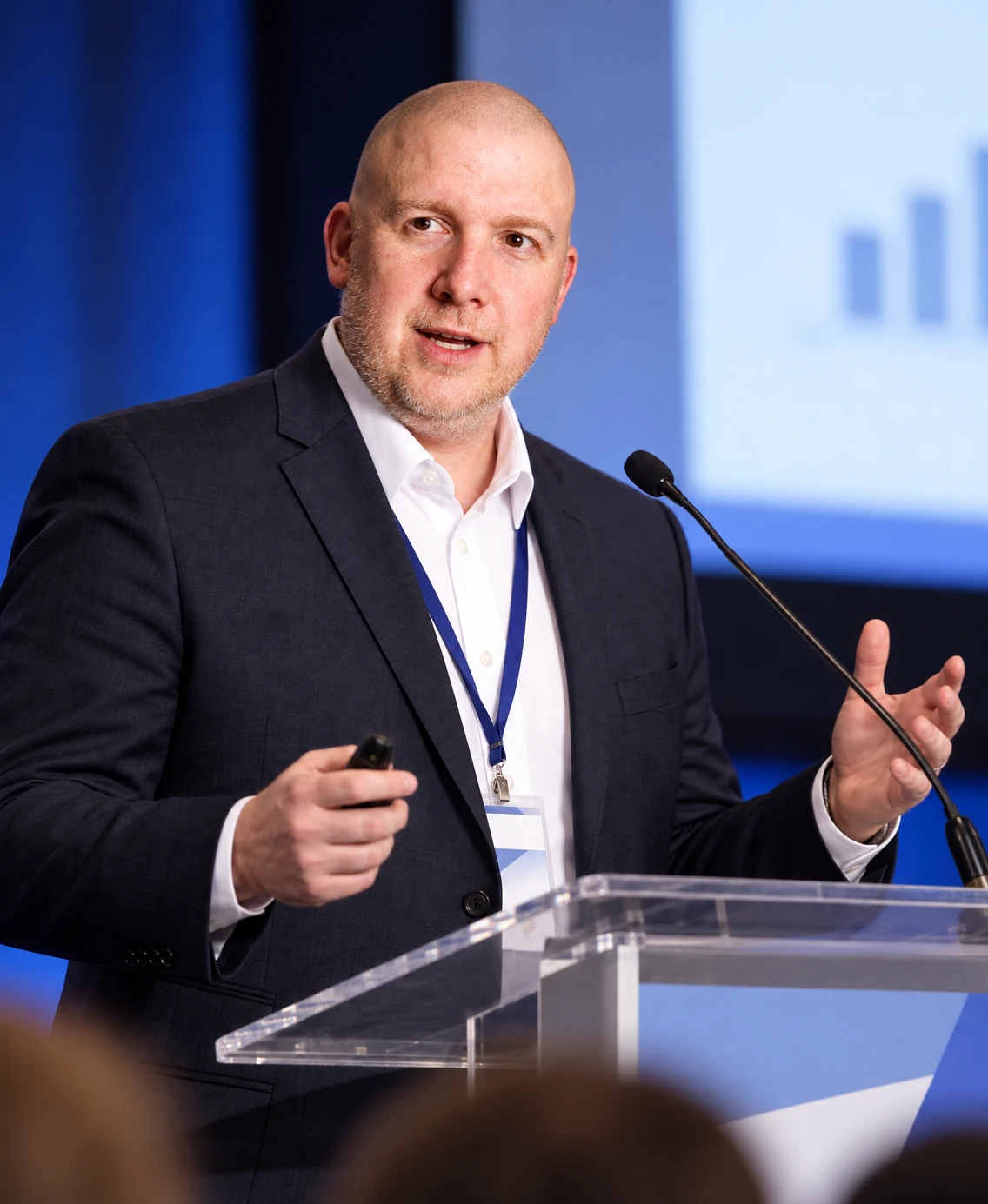
Reinhold Schilling speaking at a conference

On-site seminar · Frankfurt · SV-27-10-01

AI in Pharmacovigilance: From Use Case to Inspection

You take your own AI use case through tool selection, regulation, validation and vendor oversight to an inspection-ready go-live.

Two days with Reinhold Schilling and Stefan Brüning, five editable kits and one use case of your own, worked through from the first decision to the inspection.

EUR 1,290standard price from 16 July 2027

EUR 890

Black Friday Special, until 30 November 2026 · max. 5 seats

Per person, net price plus VAT · lunch and refreshments included

Dates
Tuesday 19 and Wednesday 20 October 2027
Time
09:00–17:00 CEST on both days, with breaks
Where
On site · Mercure Hotel Frankfurt Messe, Frankfurt am Main
Language
English · level intermediate
Group
17 to 25 participants
Proof
Certificate with passed assessment

Overview

What you take back to your PV system

  • You decide where rules, AI or people belong in each PV process step, and document why.
  • You design human oversight that demonstrably catches AI errors, with decision rights and audit trail.
  • You steer AI projects with CPMAI and select vendors via RFI and RFP, ready for inspection.
  • You validate AI against a testable intended use and take a pilot into operation through defined gates.

AI has arrived in pharmacovigilance: tools extract case data, draft narratives, code MedDRA terms and rank literature hits. None of this moves responsibility. Every decision remains with the marketing authorisation holder and the QPPV; what changes is where that responsibility must be designed, documented and evidenced. The EU AI Act and its AI-literacy obligation directly affect PV teams, draft Annex 22 and the revised Annex 11 make AI in GxP workflows concrete, and inspectors increasingly ask not whether you use AI, but whether you control it.

This is no general AI introduction. Two practitioners, the QPPV and the project side, take one of your real use cases through the complete path: tool decision, regulatory mapping, process readiness, project setup with CPMAI, vendor selection via RFI and RFP, validation against a testable intended use, human oversight design and, finally, the pilot going into operation through defined gates. Workshops in small groups, a continuous fictional case, a live demo on synthetic data and reusable kits in editable formats make the content immediately usable.

Learning objectives

Afterwards, you can …

  1. Objective 1

    Choose the right tool

    You assign each PV process step the simplest adequate approach (rule-based automation, ML or generative AI) and document the decision.

    Practised in: Hybrid intake workflow walkthrough, day 1

  2. Objective 2

    Apply the rules

    You explain what GVP, the EMA reflection paper on AI, the EU AI Act incl. AI literacy, draft Annex 22, revised Annex 11 and data protection demand for a PV AI use case.

    Practised in: Case discussion, day 1; assessment

  3. Objective 3

    Make oversight real

    You define decision rights, review depth, audit trail and escalation rules so reviewers demonstrably catch AI errors instead of rubber-stamping.

    Practised in: Seeded-error exercise, day 1

  4. Objective 4

    Set up the project

    You structure an AI project in the six CPMAI phases with a business case and a Go/No-Go decision per phase.

    Practised in: Homework decision record, review on day 2

  5. Objective 5

    Select and oversee vendors

    You draft an RFI/RFP with testable requirements, contract clauses that count, and oversight KPIs for the running operation.

    Practised in: RFP exercise and vendor case study, day 2

  6. Objective 6

    Validate and launch

    You formulate a testable intended use, validate with a reference set (recall, precision, subgroups) and steer a pilot through gates into routine operation.

    Practised in: Validation exercise, day 2; assessment

Kits and templates

Five kits in editable formats

  • AI Readiness Check

    Checklist · Excel

    Twelve questions on decision ownership, criteria, reference data and data use; answer them before choosing any type of automation.

    In advance, with the pre-read pack

  • Use-Case Scoring Matrix

    Template · Excel

    Score use cases on benefit vs. PV risk; produces Go, Go-with-conditions or Not-now for your portfolio review.

    End of day 1, used in workshop 1

  • RFI/RFP Requirements Library

    Template · Word

    Testable requirements derived from the intended use, plus contract clauses (model-change notice, data location, retention, audit rights).

    End of day 1

  • Decision-Record Templates

    3 templates · Word

    Documented records for tool decisions, review depth and the release decision, ready for the inspection binder.

    End of day 1, used for the homework

  • Inspection Storyboard & AI Inventory

    Template · Excel

    Walk an inspector through your AI systems: intended use, evidence, oversight, changes; pre-filled with the ten questions they will ask.

    After the seminar

Always included as well: slides as PDF, the pre-read and the certificate as PDF.

Learning path

How the two days run

No lecture block runs longer than 30 minutes, every block ends with a result for your own use case, and both days include group work at the flipchart.

Before the seminar · Pre-read

From 12 October 2027 · approx. 30 min, sent by email with the pre-read pack

  • Self-check: where does your organisation stand on AI in PV (watching, testing, piloting, in operation)?
  • Choose one real, anonymised PV process step you consider automating; this use case accompanies you for both days.
  • Short glossary: rule-based automation, machine learning and generative AI in PV terms; slides as PDF follow.

Day 1 · Tuesday, 19 October 2027

09:00–17:00 · Foundations, regulation and human control

  1. 09:00

    Welcome: where does your PV stand on AI?

    Moderated roundPre-read
    • Round of introductions with a maturity self-check: watching, testing, piloting or in operation
    • One use case, one concern: participants’ own questions collected and carried through both days

    Result: Each participant picks the use case to work on

  2. 09:30

    Module 1: Rules, models or language models, the right tool for each step

    Lecture + walkthroughGVP Module VI Rev. 2
    • Digitisation, rule-based automation, machine learning and generative AI distinguished by what they can and cannot guarantee
    • Deterministic where the logic can be written down, AI where interpretation is needed; walkthrough: an incoming case e-mail in a hybrid workflow
    • What AI may do (recognise, extract, draft, prioritise) and what stays with accountable people
  3. 10:30

    Break · 15 min

  4. 10:45

    Module 2: Process first, then tool

    Exercise + short inputAI Readiness Check
    • Exercise: repair an AI-drafted case; what is sourced, what invented, what open?
    • Map the handovers from intake to the released data set without losing the clock start
    • Four process problems to solve before automating anything

    Result: Readiness check completed for the own use case

  5. 12:30

    Lunch break · 60 min

  6. 13:30

    Module 3: The regulatory framework for AI in PV

    Lecture + discussionRegulation (EU) 2024/1689 (EU AI Act) · EMA Reflection Paper on AI (2024) · EU GMP Annex 22 (draft) & Annex 11 (rev.)
    • Why MAH and QPPV responsibility never transfers to a tool; GVP, the EMA reflection paper on AI, EU AI Act incl. the AI-literacy duty
    • Draft Annex 22 and revised Annex 11: status and what to apply today
    • Data protection and confidentiality when safety data meets cloud AI; shadow AI and an internal AI policy for PV daily work

    Result: A requirement list per use case

  7. 14:30

    Module 4: Human oversight that actually controls

    Lecture + small-group exerciseDecision-Record Templates
    • Why “human in the loop” is not control: automation bias in experienced reviewers
    • Five AI error types every reviewer must recognise, from invented data to false certainty; decision rights per use case: propose, prepare or decide
    • An audit trail that shows what the reviewer saw, changed and why; review depth by impact, calibrated confidence, escalation rules

    Result: A review design for the own use case

  8. 15:30

    Break · 15 min

  9. 15:45

    Workshop 1: Score your own use case

    Workshop, both speakersUse-Case Scoring Matrix
    • Small groups at the flipchart: sketch the process, place an AI output, define the human decision
    • Score benefit against PV risk, with a veto when prerequisites are missing

    Result: Go, Go-with-conditions or Not-now, with reasoning and next step

  10. 16:45

    Close of day 1 · until 17:00

    Q&A
    • Wrap-up of the day’s results; homework briefing

Between day 1 and day 2 · Homework

Max. 45 min · due by 08:30 on day 2

Draft the decision record for your own use case with the template: intended use, decision rights, review depth, one open risk; note the two requirements you would put into an RFP.

Reviewed in the first block of day 2 (09:00), in pairs and plenary.

Day 2 · Wednesday, 20 October 2027

09:00–17:00 · Projects, vendors, validation and go-live

  1. 09:00

    Review of the homework and open questions from day 1

    Pair review + plenaryDecision-Record Templates
    • Peer feedback on the decision records in pairs

    Result: Decision records refined for the project and vendor modules

  2. 09:30

    Module 5: Steering AI projects with CPMAI (Stefan Brüning)

    Lecture + casePMI-CPMAI™
    • The six CPMAI phases from business understanding to operationalisation
    • Data understanding and preparation: why most AI projects fail on the data; iterative instead of waterfall, and how that fits GxP documentation
    • Business case and Go/No-Go decisions per phase

    Result: A phase plan for the own use case

  3. 10:20

    Module 6: Finding the right vendor, RFI and RFP (Stefan Brüning)

    Lecture + exerciseRFI/RFP Requirements Library
    • Probe the market with an RFI: which questions separate the wheat from the chaff
    • From intended use to specification: an RFP with testable requirements; evaluation matrix, reference visits, proof of concept on anonymised own data
    • Contract clauses that count: model-change notice, data location, retention, audit rights

    Result: A requirements shortlist for the RFP

  4. 11:15

    Break · 15 min

  5. 11:30

    Module 7: Validate what you deploy, and keep it valid (Reinhold Schilling)

    Lecture + worked exampleISPE GAMP 5 (2nd Ed.) · EU GMP Annex 11 (rev.)
    • From a vague wish to a testable intended use with a baseline; risk as impact × consequence and matching evidence (GAMP 5 thinking)
    • The reference set as measurement instrument: recall, precision, subgroups, confidence intervals
    • After go-live: drift and monitoring, and why a changed prompt is a change; seeded-error test to prove reviewers find errors

    Result: A validation plan outline for the own use case

  6. 12:30

    Lunch break · 60 min

  7. 13:30

    Module 8: Vendor oversight in the running operation (Stefan Brüning)

    Group case studyGVP Module I · Oversight KPI set
    • What an accuracy figure reveals, and what it hides; supplier qualification, SLAs and KPIs that do not gloss over rubber-stamping
    • Case study in groups: would you release this fictional AI case processing? (both speakers)
    • Ten questions an inspection will ask about this system

    Result: An oversight checklist

  8. 14:30

    Module 9: Use cases across the PV lifecycle with live demo (Reinhold Schilling)

    Live demo + discussionSynthetic data set
    • Case intake, literature screening, MedDRA coding support, narratives, QC and workload steering; signal management: ranking yes, closing judgement no
    • Live demo: a narrative and sender-comment assistant in Microsoft Copilot Agent Builder on synthetic data
    • Prompt injection: when the source document contains instructions

    Result: A requirements checklist reviewed against a live demo

  9. 15:40

    Break · 15 min

  10. 15:55

    Module 10: From pilot into operation (both speakers)

    Lecture + planning exerciseInspection Storyboard & AI Inventory
    • Why pilots stall: no baseline, no exit criteria, no decision maker
    • Acceptance, training and roles: change management in the PV team; integration with the safety database and the IT landscape
    • Four gates with named decision makers and the inspection storyboard for the AI inventory

    Result: A gate plan for the own use case

  11. 16:45

    Close of day 2 · until 17:00

    Q&A
    • What is on your roadmap on Monday? Commitments in one sentence each
    • Note on the assessment and certificate

After the seminar · Assessment and certificate

On the day of the last session, the link to the online test (5–10 questions) is sent by email, to be completed within 5 working days; pass mark 80 %, one retake possible. Within 30 days after day 2 the speakers answer questions about the assessment via contact@schilling-vigilance.com. After a passed assessment the personal certificate (PDF) follows within five working days.

Regulatory status as of November 2026. All references are re-checked before the seminar date.

Audience

Who it is for

  • EU QPPVs, deputies and QPPV-office staff
  • Heads of PV, PV-operations leads and German local QPPVs (Stufenplanbeauftragte)
  • PV specialists in case processing, literature, signal management and safety systems
  • QA, compliance and inspection-readiness professionals
  • Project leads and IT, CSV and digitalisation leads for PV systems
  • Procurement, vendor management and outsourcing oversight in the PV environment

Not suitable for

Software developers looking for prompt-engineering or model-training tutorials, and teams wanting a general AI overview without any reference to regulated PV processes.

Prior knowledge

Solid PV process knowledge; no programming or data-science background needed. Ideal preparation: bring one real, anonymised process step you consider automating.

Speakers

Two practitioners, both days in the room

Portrait of Reinhold Schilling

Reinhold Schilling

Dipl.-Chem., M.D.R.A.

Head of Global Pharmacovigilance, EU QPPV and Stufenplanbeauftragter

Reinhold Schilling has headed global pharmacovigilance at an internationally operating pharmaceutical group since 2021, where he is EU QPPV and Stufenplanbeauftragter. A chemist by training with a Master of Drug Regulatory Affairs, he has worked in drug safety since 2011, including earlier roles as Stufenplanbeauftragter and information officer for Germany and Austria. He trains PV teams, audits PV systems and teaches pharmacovigilance at Reutlingen University and in the Pharma MBA at Goethe Business School. He is a member of the BPI pharmacovigilance working group.

  • EU QPPV in practice: leads global pharmacovigilance as EU QPPV and Stufenplanbeauftragter
  • AI and digital PV: hands-on experience with automation and AI in PV processes, including governance, validation and vendor oversight
  • Teaching: lecturer at Reutlingen University and in the Pharma MBA at Goethe Business School; member of the BPI PV working group
  • Academic background: Diplom-Chemiker and Master of Drug Regulatory Affairs (M.D.R.A.), University of Bonn

Speaking in a personal capacity, not on behalf of his employer.

Full profile

Portrait of Stefan Brüning

Stefan Brüning

Dipl.-Biol., MBA, PMP®, PMI-CPMAI™

Co-Founder and Consulting Practice Lead, VIGINEXT · Pharmacovigilance and AI Governance Advisor

Stefan Brüning advises pharmaceutical and biotech companies on their pharmacovigilance systems, on due diligence in acquisitions and licensing deals, and on the use of AI in the life sciences. A biologist by training with an MBA, he previously led patient safety and pharmacovigilance at Horizon Therapeutics (now Amgen) and worked as a senior consultant at Navitas Life Sciences and amontis. He is a certified project manager (PMP) and PMI-CPMAI practitioner and teaches in the Pharma MBA at Goethe Business School in Frankfurt. He co-founded VIGINEXT and began his career as a paramedic.

  • AI governance in drug safety: PMI-CPMAI™ certified; advises on AI readiness, governance and validation of AI in drug safety, vendor-neutral and with no software to sell
  • PV practice: Manager, Patient Safety and Pharmacovigilance at Horizon Therapeutics (now Amgen), then senior consultant at Navitas Life Sciences and amontis
  • Teaching and faculty: guest lecturer at Goethe Business School (Pharma MBA) and DIA faculty for PV computerised system validation
  • Publications: whitepapers on PV vendor selection and AI governance; co-author in pharmind (Die Pharmazeutische Industrie, 2027, with R. Schilling)

Speaking in a personal capacity.

Full profile

Why this seminar

Four reasons to spend two days on it

  • One use case, both days

    You do not leave with notes, but with a documented Go, Go-with-conditions or Not-now record for your own use case, produced in the workshop and refined in the homework.

  • Two practitioners, two perspectives

    The QPPV’s accountability meets project and vendor-selection experience; both speakers are present on both days and in the workshops.

  • Kits you can use on Monday morning

    Readiness check, scoring matrix, requirements library, decision records and inspection storyboard in editable Excel and Word formats.

  • Live demo on synthetic data

    See a narrative assistant being built in Microsoft Copilot Agent Builder, watch prompt injection undermine it, and learn what it would take to deploy it on real cases.

Certificate and assessment

How you document the training

Certificate
Personal certificate as PDF with title, date, duration, content and certificate ID. Suitable as proof of training for the training record and the PSMF.
Requirements
At least 90 % attendance (live time according to the signed attendance list on both days; official breaks do not count) and a passed assessment. The certificate will not be withheld because of technical problems on the organiser’s side.
Assessment
Mandatory for all participants. Online test with 5–10 multiple-choice questions after the last session; the link is sent by email the same day, to be completed within 5 working days. Pass mark 80 % correct answers, rounded up. One retake is possible.
Delivery
Within 5 working days of passing the assessment. Queries about the assessment are answered for up to 30 days after the last session.

Prices and booking

Book with one email

No form, no account: booking by email, payment by invoice. Prices are per person; the rate valid on the day your booking email arrives applies. All rates include seminar materials, the editable kits, lunch and refreshments on both days. Travel and accommodation are organised and paid by participants.

RateValidNetIncl. 19 % VAT
Black Friday Specialnowuntil 30 November 2026, max. 5 seatsEUR 890EUR 1,059.10
Super Early Bird1 December 2026 – 31 March 2027EUR 990EUR 1,178.10
Early Bird1 April – 15 July 2027EUR 1,090EUR 1,297.10
Standardfrom 16 July 2027EUR 1,290EUR 1,535.10
Career Starters & Academiathroughout, max. 4 seats. Students, doctoral researchers and PV professionals with less than two years in PV; proof required.EUR 690EUR 821.10

Businesses pay the net price plus VAT; EU companies outside Germany with a VAT ID are invoiced under the reverse-charge procedure. Private individuals pay the price including 19 % VAT.

  1. Step 1

    Send an email

    Send the details from the template below to contact@schilling-vigilance.com. You can register several colleagues in one email.

  2. Step 2

    Receive confirmation

    Within one working day you receive the booking confirmation with links to the seminar terms and the privacy policy.

  3. Step 3

    Pay the invoice

    The invoice is sent by email, payable within 14 days, at the latest by the start of the seminar.

  4. Step 4

    Join in Frankfurt

    Venue details and directions arrive with the booking confirmation; the pre-read pack follows one week before the seminar. Please organise travel and accommodation yourself.

Register at contact@schilling-vigilance.com

Subject: Registration SV-27-10-01 AI in Pharmacovigilance: From Use Case to Inspection, 19–20 October 2027

Name(s) of participant(s):
Email address(es) for the booking confirmation:
Company (not applicable for private individuals):
Billing address:
Invoice recipient (if different from participants):
VAT ID (EU companies outside Germany; invoice then under the reverse-charge procedure):
Purchase order number (if required):
Contact person for the invoice:
Rate requested (Black Friday / Super Early Bird / Early Bird / Standard / Career Starters & Academia incl. proof):
Dietary requirements / allergies (optional):
Open email app
Payment
By invoice, payable within 14 days, at the latest by the start of the seminar. For companies, self-employed professionals and private individuals.
Delivery
Min. 17, max. 25 participants. Contingents: max. 5 Black Friday seats, max. 4 Career Starters & Academia seats. Confirmation no later than 42 days before the start (by 7 September 2027), otherwise full refund. After that, bookings only for confirmed seminars.
Registration deadline
15 October 2027 (four days before the start)
Cancellation
  • up to 42 days before the start (until 7 September 2027): free of charge
  • 41 to 14 days before the start (until 5 October 2027): 50 %
  • 13 days or less before the start (from 6 October 2027), or no-show: 100 %

Free cancellation is excluded for bookings made after the confirmation date. A substitute participant can be named at any time free of charge. Private individuals also have their statutory right of withdrawal.

Recording
The seminar is not recorded.
Terms and privacy
The seminar terms apply, including the provisions for on-site seminars in section 14. Personal data is processed under the privacy policy.

From 1 January 2027, all prices are plus statutory VAT. For business customers in other EU countries with a valid VAT ID, the reverse charge mechanism may apply.

Venue and travel

Mercure Hotel Frankfurt Messe

Getting there

Close to the exhibition grounds and the Festhalle/Messe S-Bahn station; around 10 minutes from Frankfurt Hauptbahnhof and 15 minutes from Frankfurt Airport.

The address and directions come with the booking confirmation. Car park with lift access to the hotel reception, EUR 4 per hour, max. EUR 25 per day incl. night.

Room block at the venue

A limited number of single rooms is held for the nights of 18 to 19 and 19 to 20 October 2027 at EUR 111 per night including breakfast, plus the Frankfurt city tax of EUR 2 per person and night. Book directly with the hotel using the keyword “AI in PV” up to 14 days before arrival (4 October 2027 for arrival on 18 October, 5 October 2027 for arrival on 19 October); rooms not booked by then are released. Participants book and pay their rooms themselves.

Questions

What others asked before booking

Why are the prices tiered?

Early rates reward early planning and make the seminar predictable to organise. The Black Friday contingent is limited to five seats and ends on 30 November 2026; the standard price of EUR 1,290 plus VAT applies from 16 July 2027.

Is the seminar guaranteed to take place?

It takes place with at least 17 participants. You receive the confirmation no later than 7 September 2027, otherwise you get a full refund, no questions asked.

Do I have to attend both full days?

Yes; the workshops build on each other, and the certificate requires at least 90 % attendance of the live time on both days. Single-day attendance is not offered.

Is there a hybrid or remote option?

No. Workshops, the vendor case study and the live demo are designed for the room; remote participation would lose most of the two days’ value.

Is the seminar recorded?

No. You receive the slides as PDF and all kits in editable formats.

Can private individuals book?

Yes, the same terms apply. Private individuals pay the price including 19 % VAT and keep their statutory right of withdrawal.

What happens if I do not pass the assessment?

One retake is possible. The questions cover the learning objectives of the seminar, and the speakers answer queries for 30 days after day 2.

Where exactly does the seminar take place?

At the Mercure Hotel Frankfurt Messe, close to the exhibition grounds; around 10 minutes from Hauptbahnhof and 15 minutes from Frankfurt Airport by S-Bahn. The address and directions come with the booking confirmation, so you can book travel early.

Do I need AI or IT knowledge?

No programming or data-science background is needed. If you can describe a PV process step and its risks, you are prepared.

Does the certificate count as training evidence?

Yes: a personal PDF with title, content, duration and certificate ID, suitable for the training record and the PSMF.

Can we book several colleagues or an in-house version?

Yes, group bookings by email are welcome; an in-house version of this seminar can be arranged on request.

What about catering, dietary requirements and hotel rooms?

Lunch, coffee breaks and refreshments on both days are included in the seminar fee; please note any dietary requirements or allergies when registering. Travel and overnight accommodation are arranged individually; a limited room block at the Mercure Hotel Frankfurt Messe (EUR 111 per night incl. breakfast, plus EUR 2 city tax) for the nights of 18 to 19 and 19 to 20 October can be booked directly with the hotel using the keyword “AI in PV” up to 14 days before arrival (until 4 October 2027 for arrival on 18 October, until 5 October 2027 for arrival on 19 October).

Who qualifies for the Career Starters & Academia rate?

Students, doctoral researchers and PV professionals with less than two years of industry experience (max. 4 seats). Please attach brief proof (e.g. student ID or employment start confirmation) to your registration email.

General questions on booking, invoices and certificates are answered in the seminar FAQ.